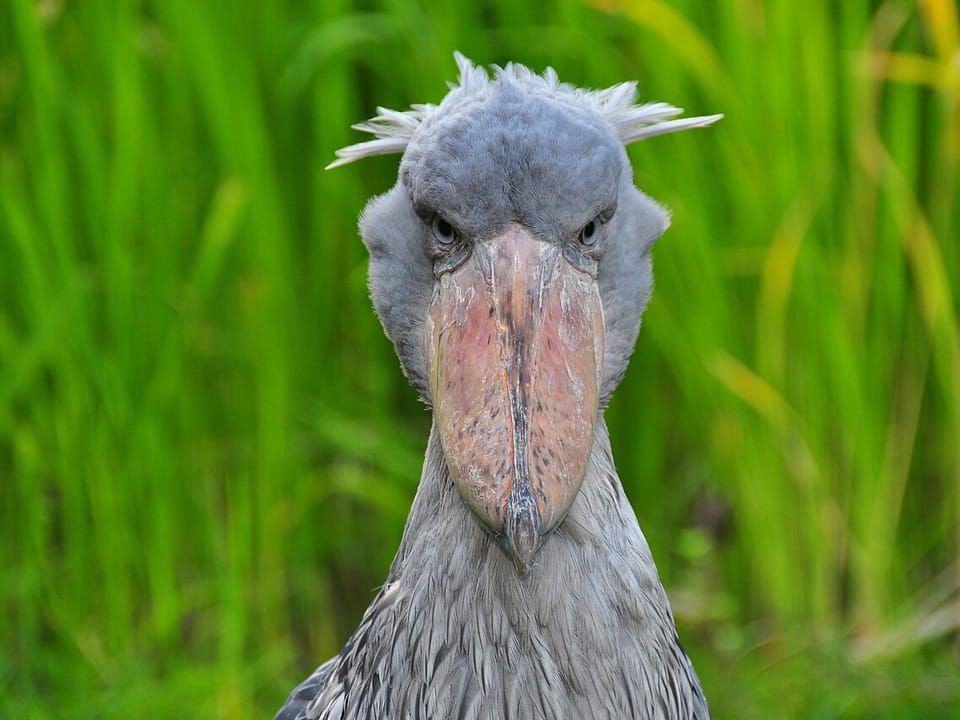
200 m² of land and 50 m² of flight space for one shoebill
The shoebill is a flying-aviary animal in the base game. For one shoebill, Frontier's Zoopedia asks for 200 m² of land, 5 m² of shelter and 50 m² of flight space, a grade 2 barrier at least 1 m high and a temperature of 14 to 33 °C. Each extra shoebill adds 200 m² of land, 5 m² of shelter and 15 m² of flight space. Shoebills live in groups of 1 to 2, can share with the Greater Flamingo and can be released into the Great Rift Valley and Tanzania reserves.
From the shoebill's page in Frontier's Zoopedia, read on 25 October 2026. The extra figure applies to each animal after the first.
Shoebill aviary requirements, Frontier's Zoopedia
Need
For one shoebill
Each extra
Land area
200 m²
+200 m²
Shelter area
5 m² per animal
+5 m²
Flight area
50 m²
+15 m²
Barrier
Grade 2, at least 1 m high
Temperature
14 to 33 °C
Terrain
Grass 20% to 80%; Sand 0% to 80%; Waterlogged 20% to 100%; Rock 0% to 20%; Soil 20% to 80%
A flying aviary is a habitat with a roof. Frontier's Habitats & Exhibits guide says flying species need plenty of space to fly, and that Roof Supports raise the roof to add flight area. The shoebill also needs 20% or more of the ground waterlogged.
Shelter only counts if the animals fit inside it, Frontier's guide says.
Aviary size for 1 to 2 shoebills
Minimum space by group size, from the Zoopedia's figures
Shoebills
Land area
Shelter area
Flight area
1
200 m²
5 m²
50 m²
2
400 m²
10 m²
65 m²
The same sums as the Zoopedia's habitat builder. The habitat calculator runs them for any species and also shows barrier and temperature.
Group, temperament and breeding
The Zoopedia calls shoebills solitary birds that pair up only to breed. The group limits match: one bird on its own, or one male with one female. The Zoopedia's preferred group is 1 to 2. It lists the temperament as shy and the mating system as monogamous.
Breeding is rated easy. Shoebills reach sexual maturity at 4 years, with a litter size of 1 to 2 and an interbirth period of 12 months.
Which animals can share an aviary with shoebills
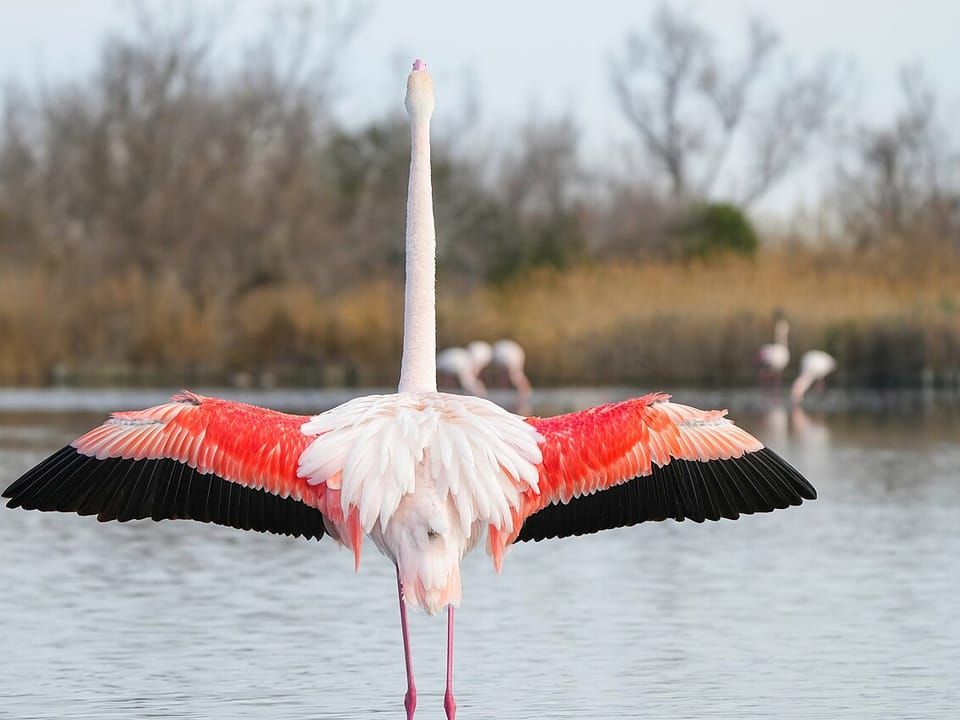
The Zoopedia lists no thriving partners and the Greater Flamingo as a neutral partner. Frontier's guide says species can share a home when their housing requirements match. The Greater Flamingo lives in groups of 20 to 500 and tolerates 14 to 33 °C, so a shared aviary has to stay within 14 to 33 °C. At its smallest preferred group of 20, its own Zoopedia figures come to 214 m² of land area, 40 m² of shelter area, 98 m² of flight area and 137 m² of aquatic area. In the game, Pin Species in the habitat's Animals tab shows the combined requirements before you move anyone in.
The Zoopedia lists these enrichment items for the shoebill:
Food-based: Bamboo Feeder, Block of Frozen Fish, Dog Ball and Forage Pool.
Habitat: Mirror Mobile, Platform Floats, Rubber Chicken, Small Ball, Plant Pot and Rubber Snake.
The Zoopedia lists the shoebill's periodic food expenses as $714.00.
Releasing shoebills into a Wildlife Reserve
The Zoopedia lists two valid reserves for the shoebill: Great Rift Valley Reserve and Tanzania Reserve. Its release group types are Female Bachelor Herd, Solitary Male and Breeding Partners, and released shoebills fill the Predators role in a reserve's ecosystem.
The Great Rift Valley Reserve takes 26 other species. The Tanzania Reserve takes 27 other species. Released animals cannot come back to your zoos. Our Wildlife Reserves guide lists every reserve's species and covers release groups, Research Outposts and Conservation Credits step by step.
The Zoopedia gives the shoebill's conservation status as Vulnerable, with a wild population of 3,000 to 5,300. Shoebills come with the base game.
The shoebill is new to the series: Frontier's Zoopedia says it is "making its franchise debut" in Planet Zoo 2. It joined the Zoopedia on 13 August 2026.
In Career mode, Alys talks about adopting a shoebill in the East Africa scenario. Update 1.0.5 (16 October 2026) fixed a softlock when you opened Animal Trading during that conversation. More in our Career mode guide.
How big does a shoebill aviary need to be in Planet Zoo 2?
For one shoebill, Frontier's Zoopedia asks for 200 m² of land, 5 m² of shelter and 50 m² of flight space. Each extra shoebill adds 200 m² of land, 5 m² of shelter and 15 m² of flight space, so a group of 2 needs 400 m² of land, 10 m² of shelter and 65 m² of flight space.
Can shoebills live with other animals in Planet Zoo 2?
The Zoopedia lists no thriving partners and the Greater Flamingo as a neutral partner. Frontier's guide says species can share a home when their housing requirements match.
Where can you release shoebills in Planet Zoo 2?
Into the Great Rift Valley and Tanzania reserves. The Zoopedia's release group types for the shoebill are Female Bachelor Herd, Solitary Male and Breeding Partners, and released shoebills fill the Predators role in a reserve's ecosystem.
Is the shoebill in the base game?
Yes, the shoebill comes with the base game. Frontier says it is "making its franchise debut" in Planet Zoo 2.