37 aquarium species, three salinities, one filter per 500 m²
To build an aquarium in Planet Zoo 2, pick Aquarium in the Habitat Barrier tool, draw the tank, then place an Aquarium Staff Gate: the tank fills with freshwater. Connect the gate to a filtration network to switch it to brackish or saltwater and keep it clean. One water filter cleans up to 500 m² of water, and the filters need power. Frontier's Zoopedia lists 37 aquarium species: 35 fish, sharks and rays, plus the Hawksbill Turtle and West Indian Manatee.
Aquarium barrierLine or curve tool
Staff gateFills the tank
Filtration networkSalinity, clean water
PowerRuns filters and heating
Keepers and mechanicsClean and repair
What this page adds
Frontier explains aquariums in its player guides and lists each species on a separate Zoopedia page. We read all 37 aquarium species pages and put them side by side: which salinity each accepts, the temperature bands that rule out mixing, how much water each needs, and which species the Zoopedia says can share a tank.
How to build an aquarium, step by step
Draw the tank. Open the Habitat Barrier tool, choose Aquarium (aquarium barriers have their own section of the Barrier menu) and draw the walls with the Line or Curve tool.
Add an Aquarium Staff Gate. The space fills with water by itself. Staff enter the water in diving suits, so the gate can sit above the ground.
Connect filtration. Place a Water Filter from Facilities, Utilities, then use Edit Filtration Network to run a pipe from the node on the staff gate to the filter. The network sets the salinity: freshwater, brackish or saltwater.
Give it power. Filters only work near a power source. Eco-friendly power costs more to build, has no running costs and adds to your Sustainability Rating.
Furnish it. Add feeders, nests and enrichment from the Aquarium tab of the Browser, then aquatic plants, scenery and terrain for each species' environment needs.
Move the animals in and assign staff. Bring the animals from Animal Storage, send in a keeper, and leave a path so mechanics can reach the filters.
Salinity: which species need freshwater, brackish or saltwater
Every aquarium species accepts one or more salinities, and the wrong water can kill: Frontier's building guide says aquarium animals in water of the wrong salinity risk dying of osmotic stress. 24 of the 37 species accept saltwater only and 7 accept freshwater only. The West Indian Manatee accepts any salinity. A species can appear in more than one column below.
Freshwater9 species
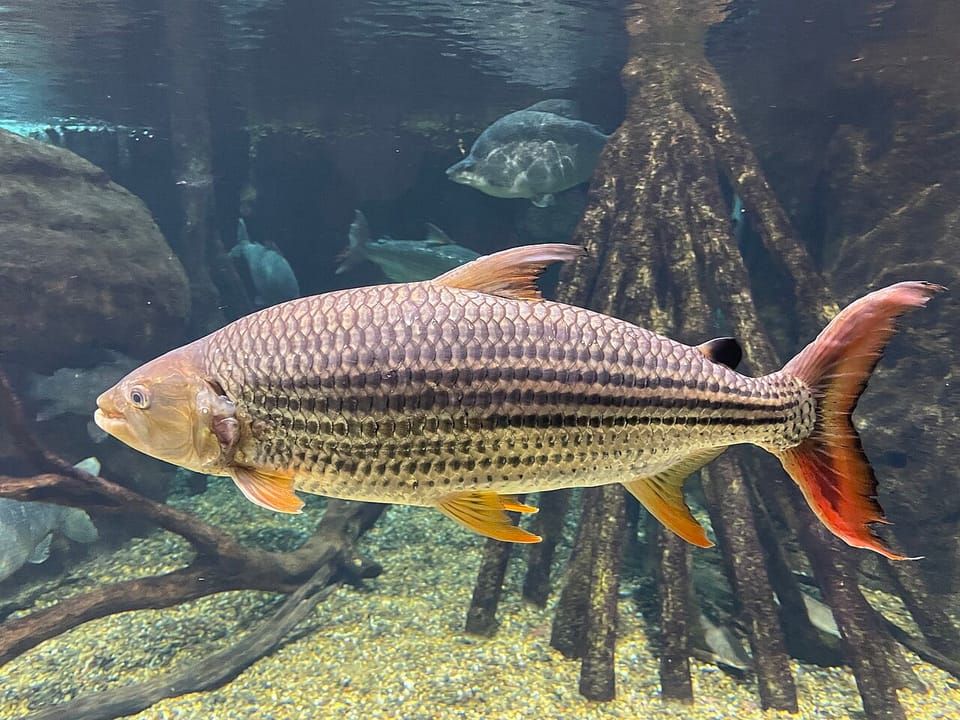
African Tigerfish
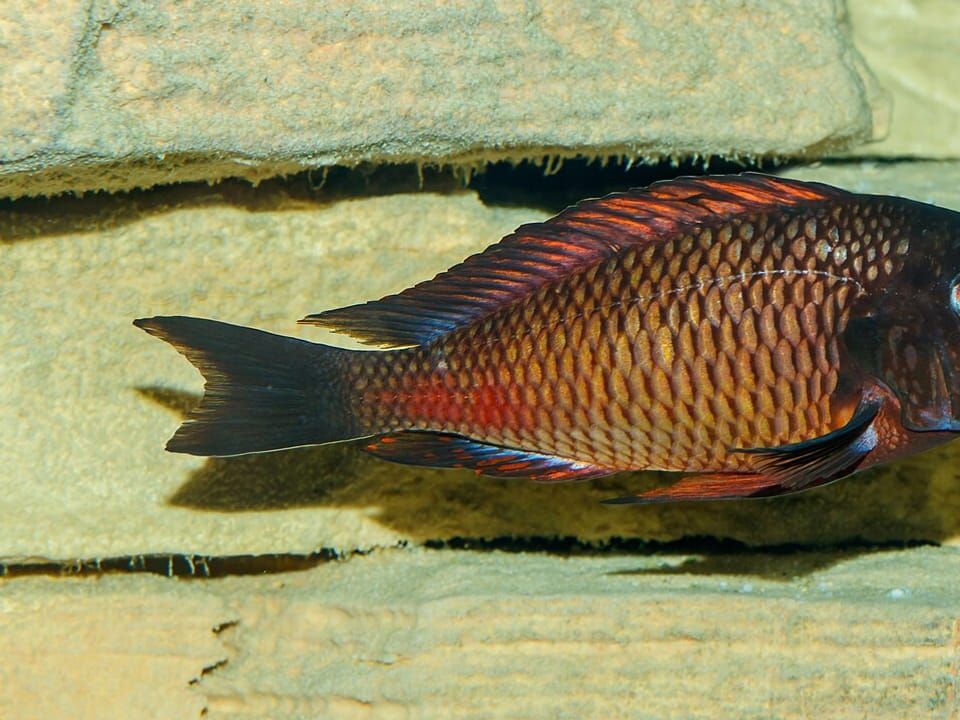
Blunthead Cichlid
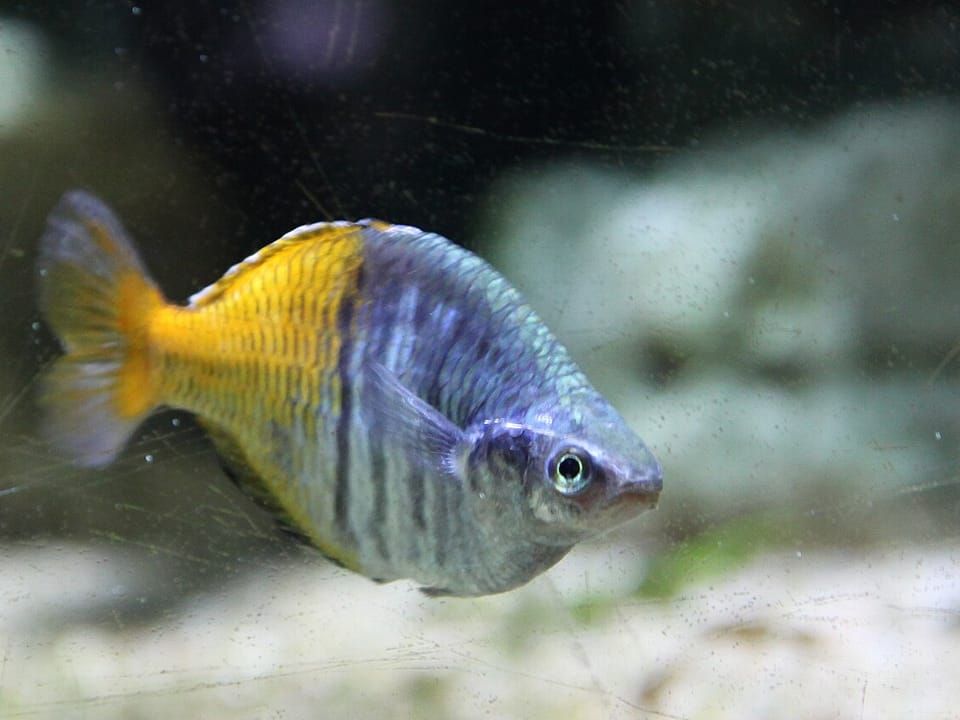
Boeseman's Rainbowfish
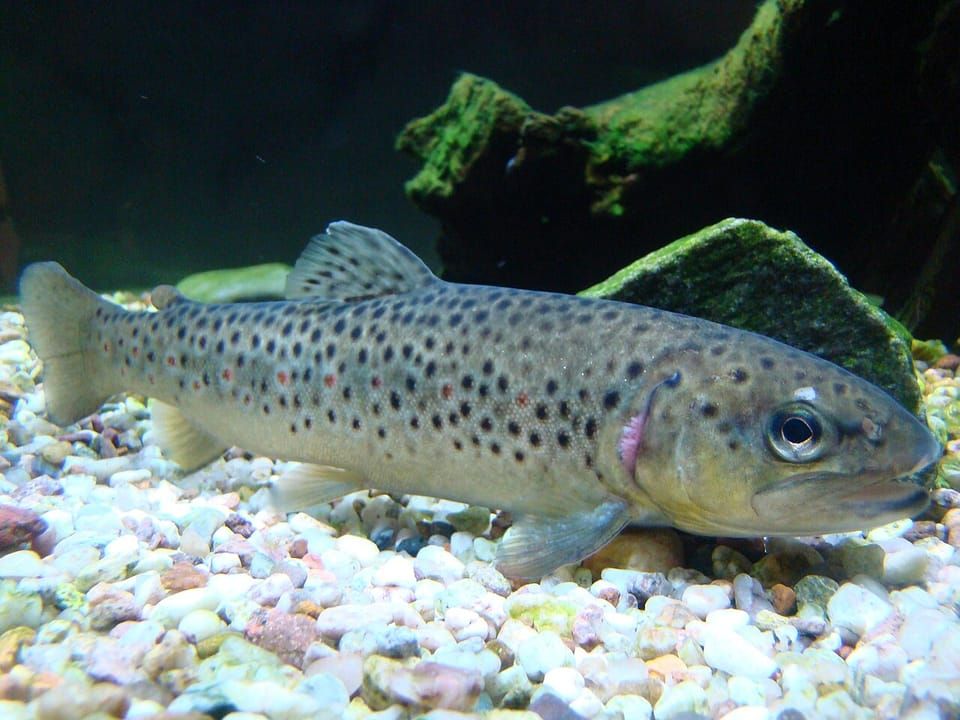
Brown Trout
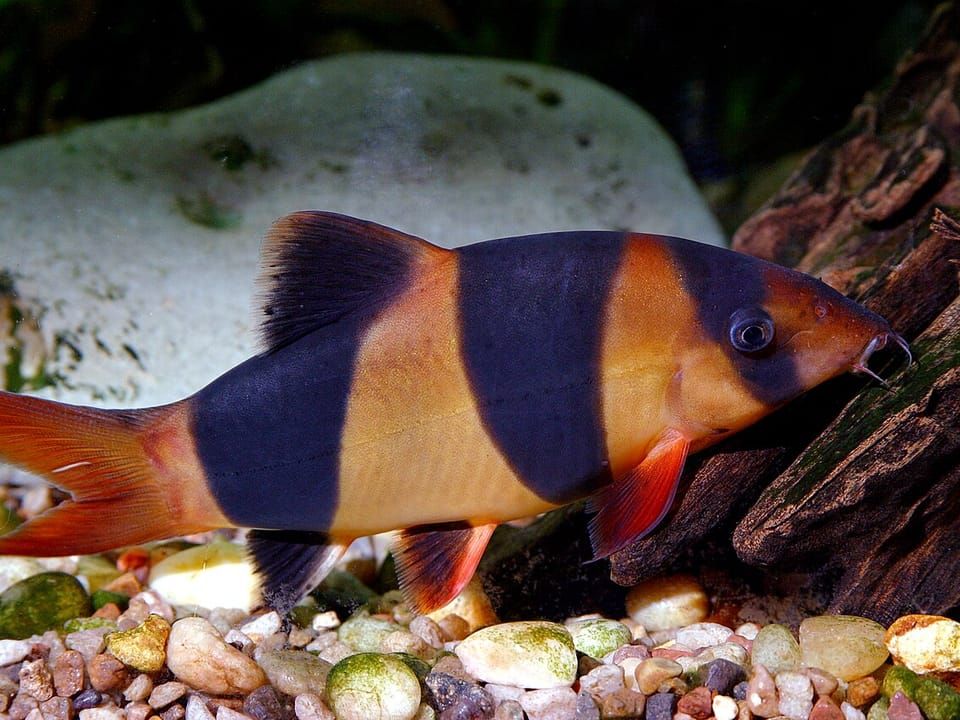
Clown Loach
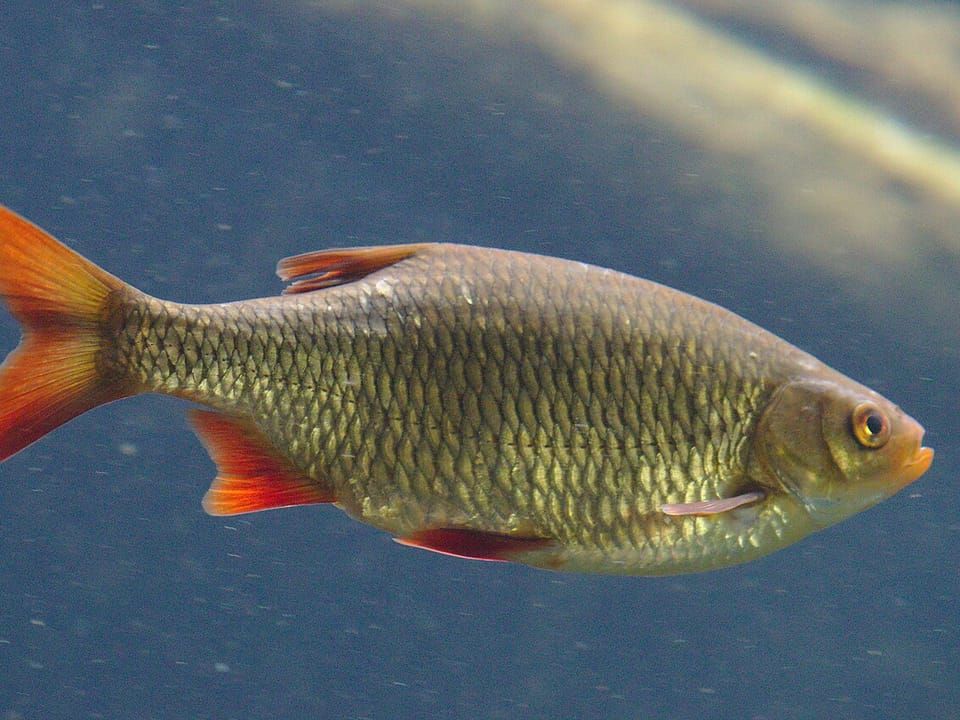
Common Rudd
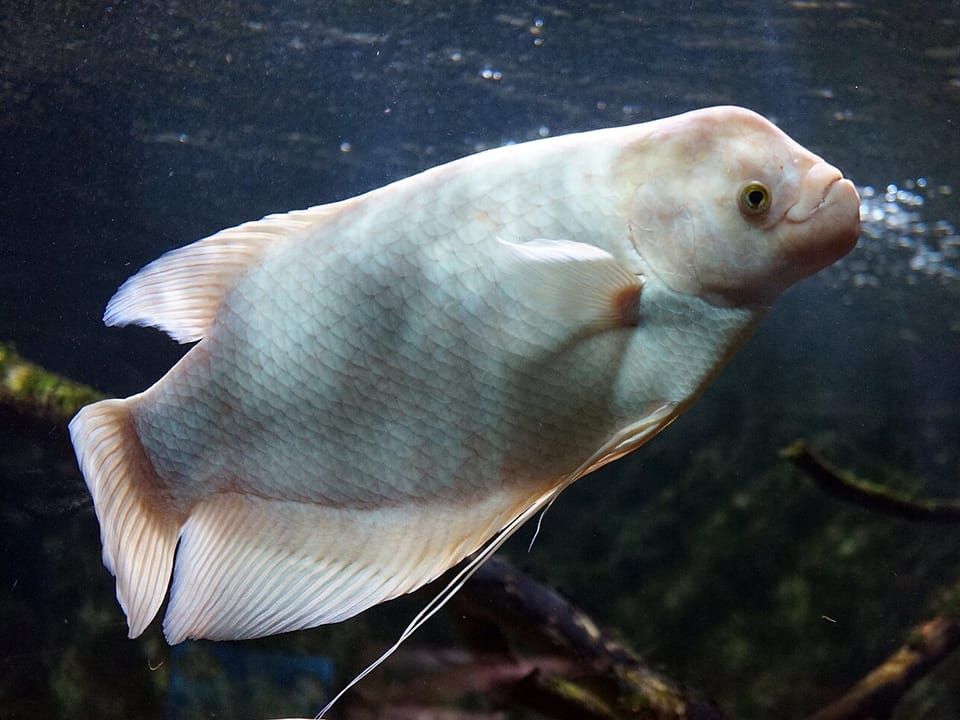
Giant Gourami
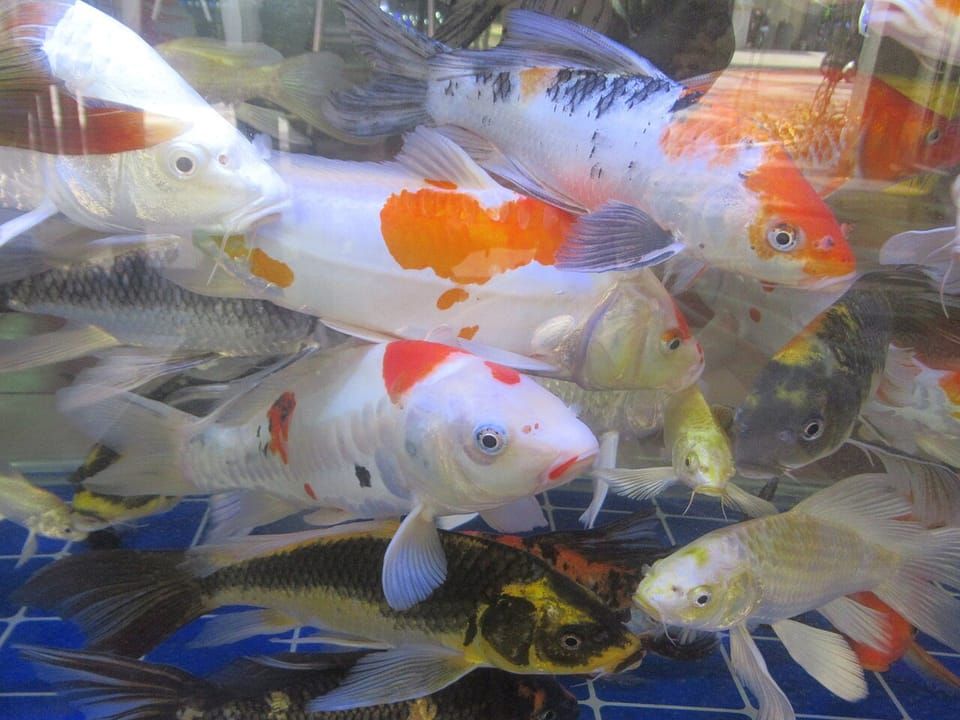
Koi
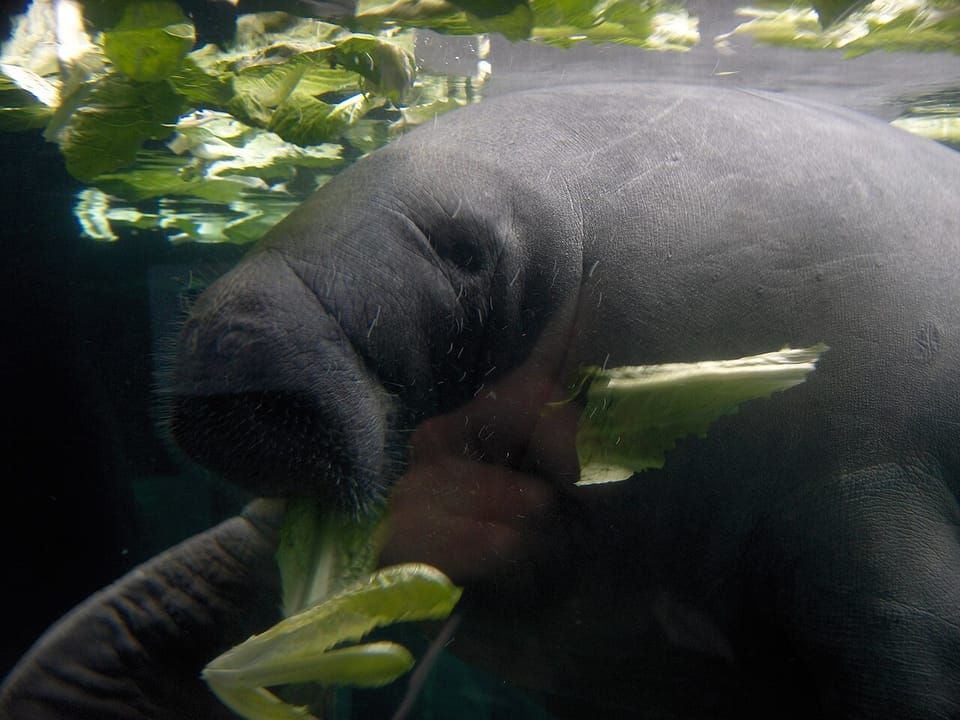
West Indian Manatee
Brackish6 species
Giant Gourami
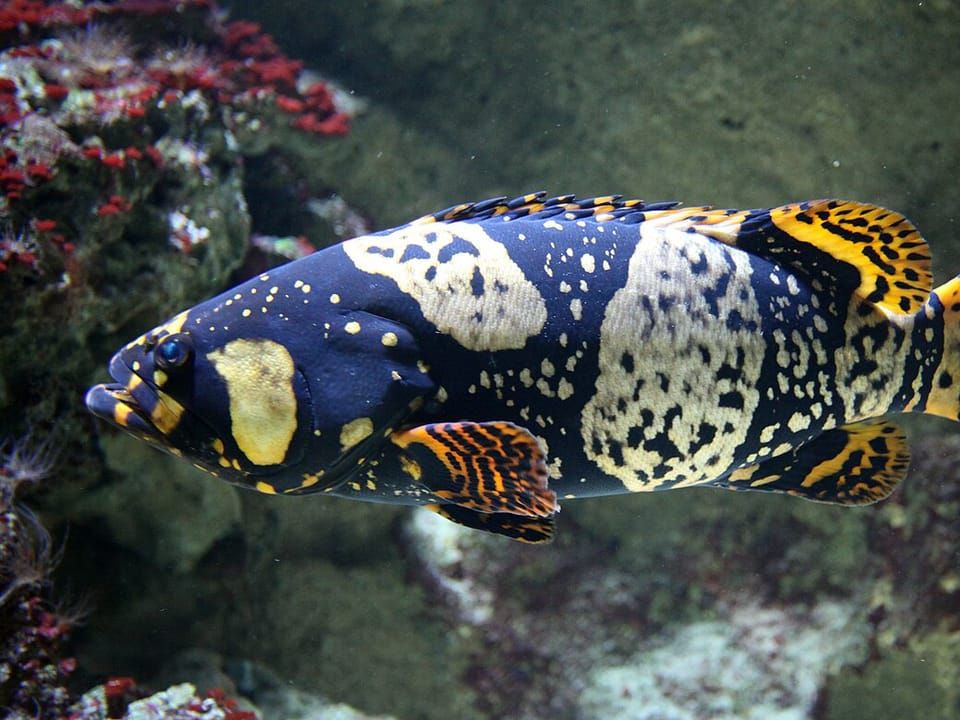
Giant Grouper
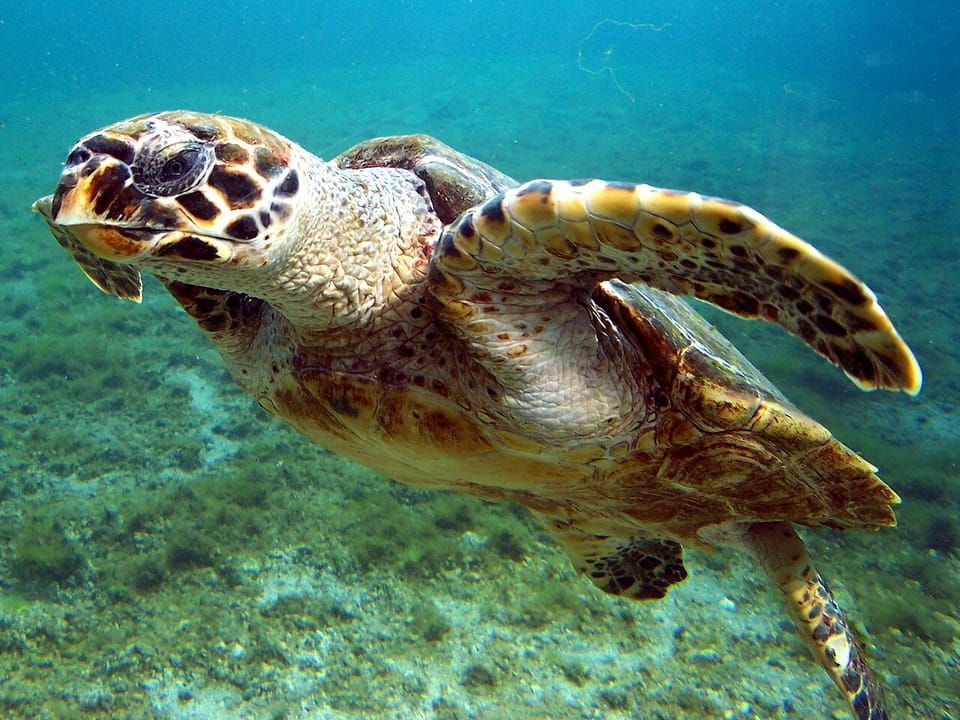
Hawksbill Turtle
Javanese Cownose Ray
Pacific Sardine
West Indian Manatee
Saltwater29 species
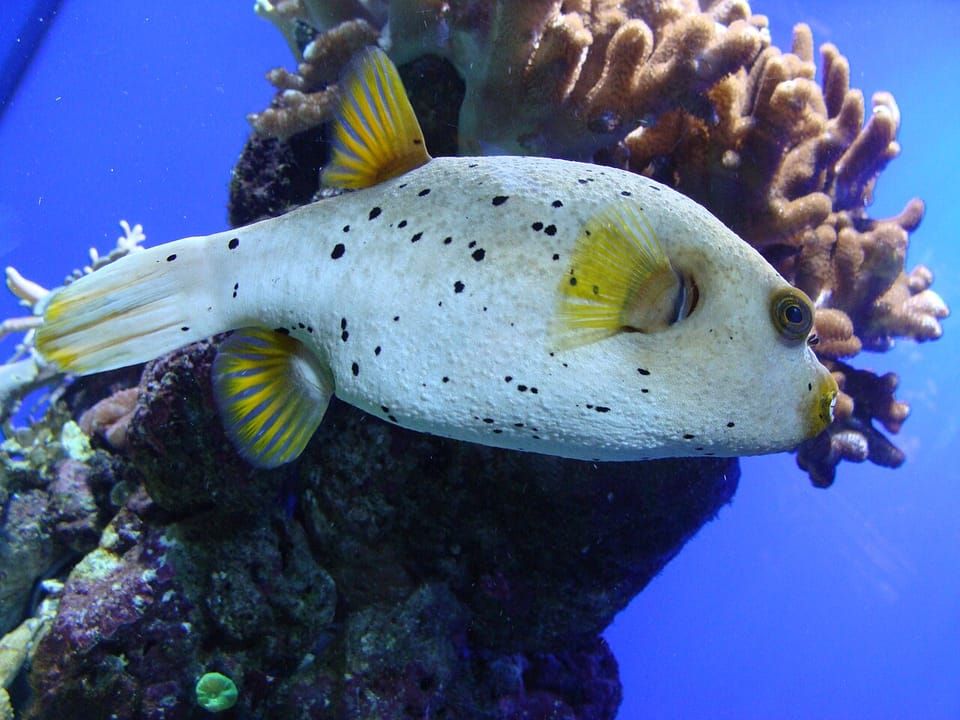
Blackspotted Puffer
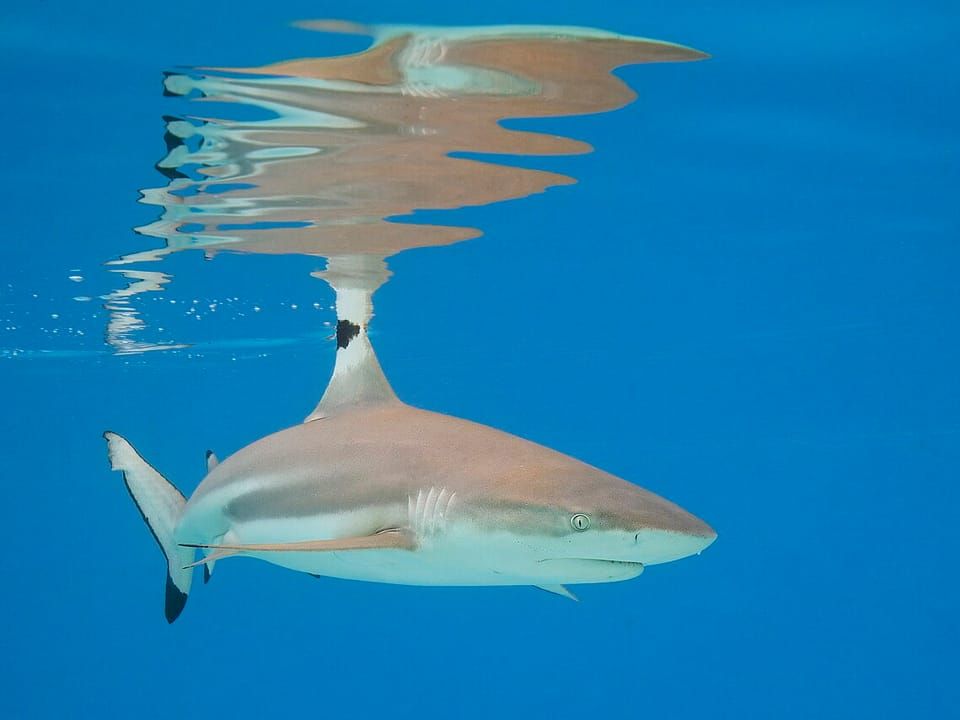
Blacktip Reef Shark
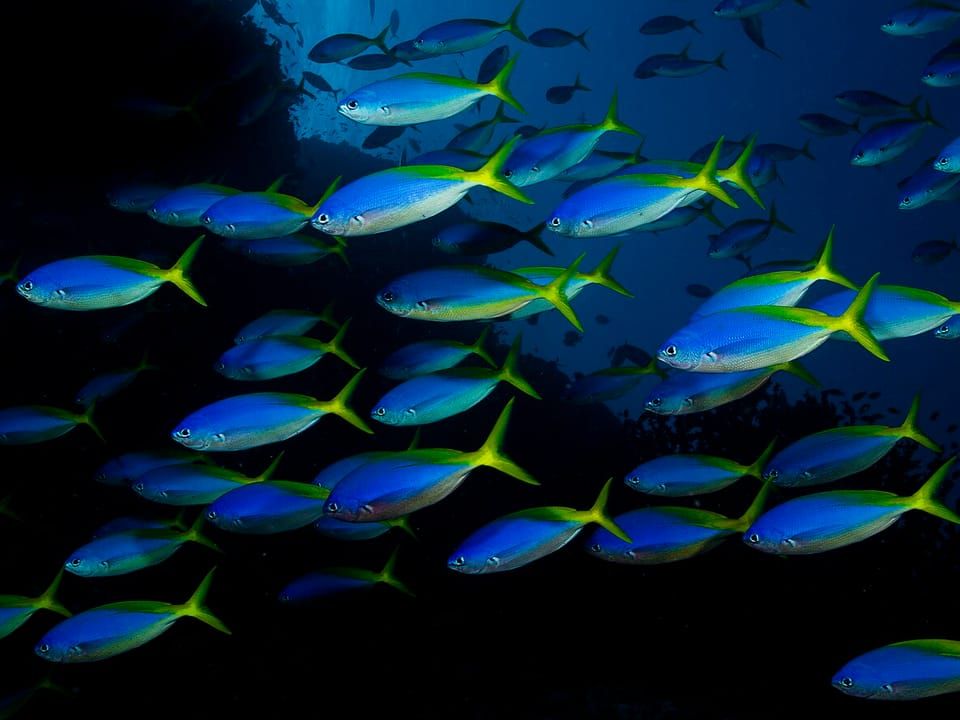
Blue and Gold Fusilier
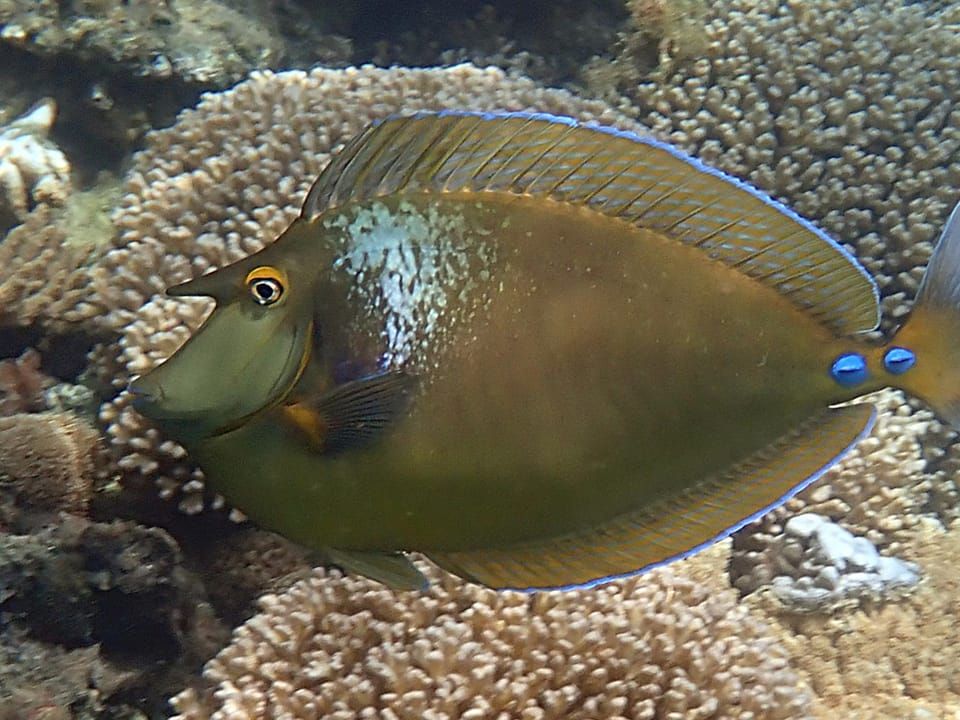
Bluespine Unicornfish
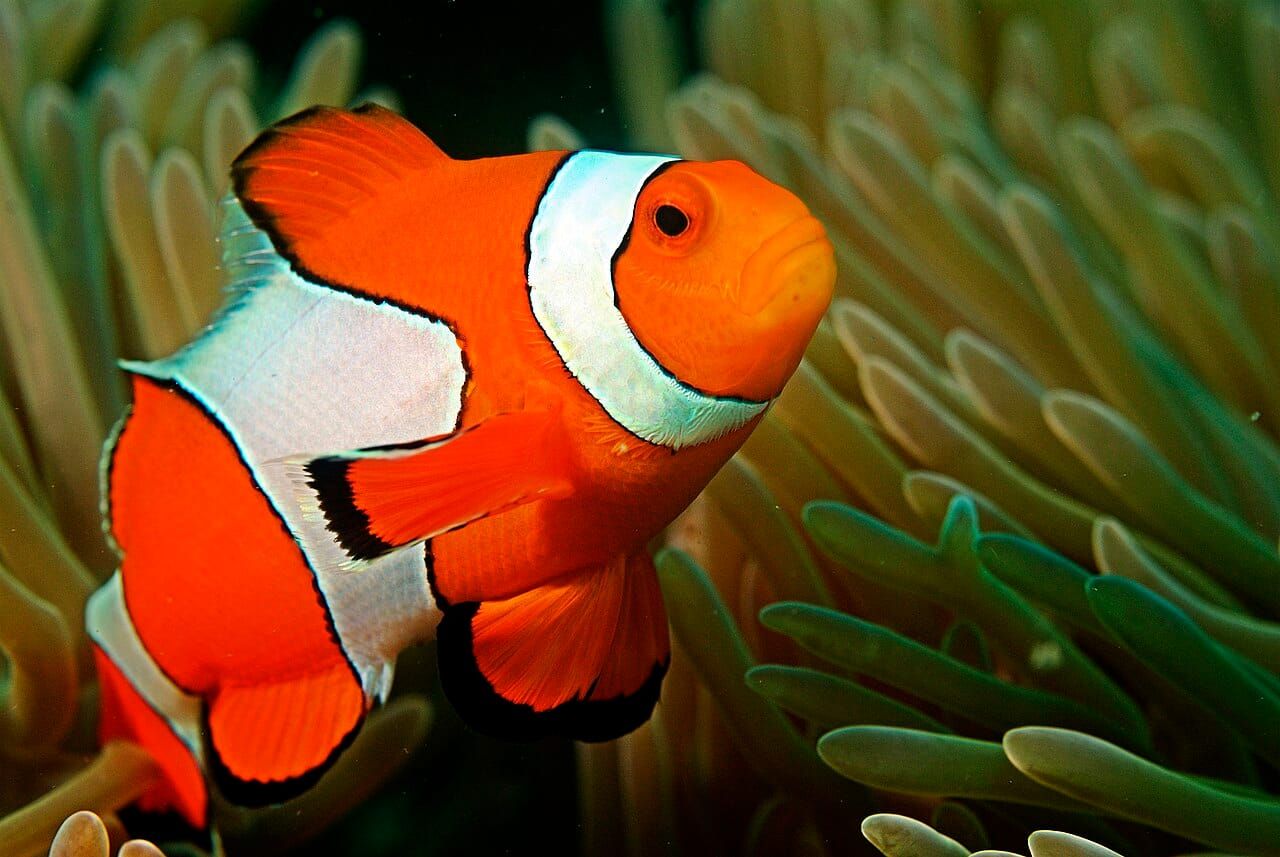
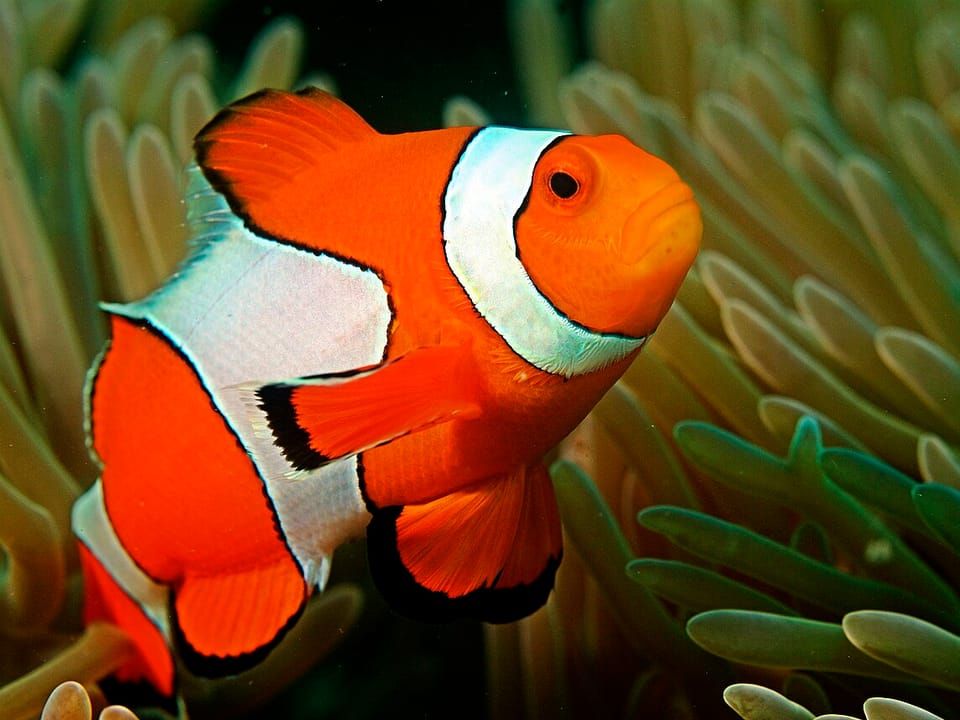
Clown Anemonefish
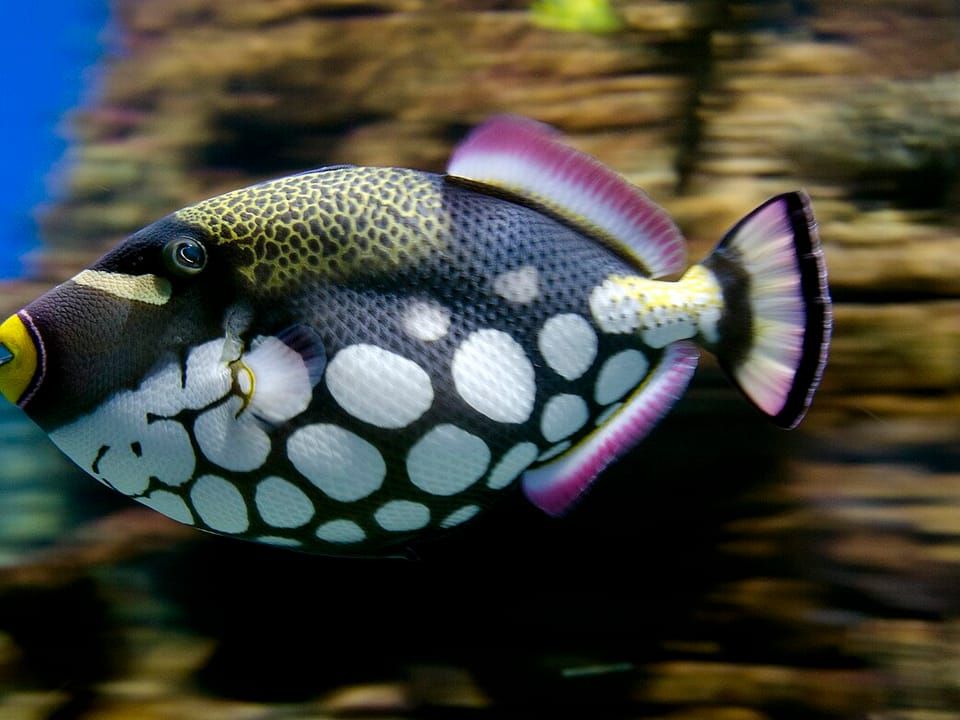
Clown Triggerfish
Dolphinfish
Giant Grouper
Golden Trevally
Great Hammerhead
Hawksbill Turtle
Humphead Wrasse
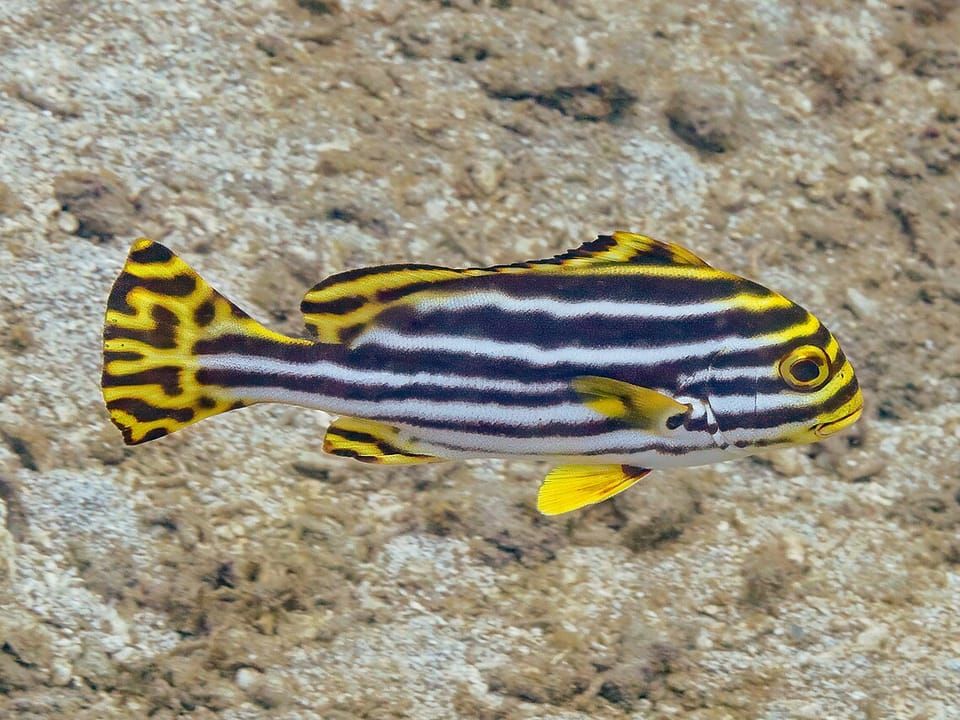
Indian Ocean Oriental Sweetlips
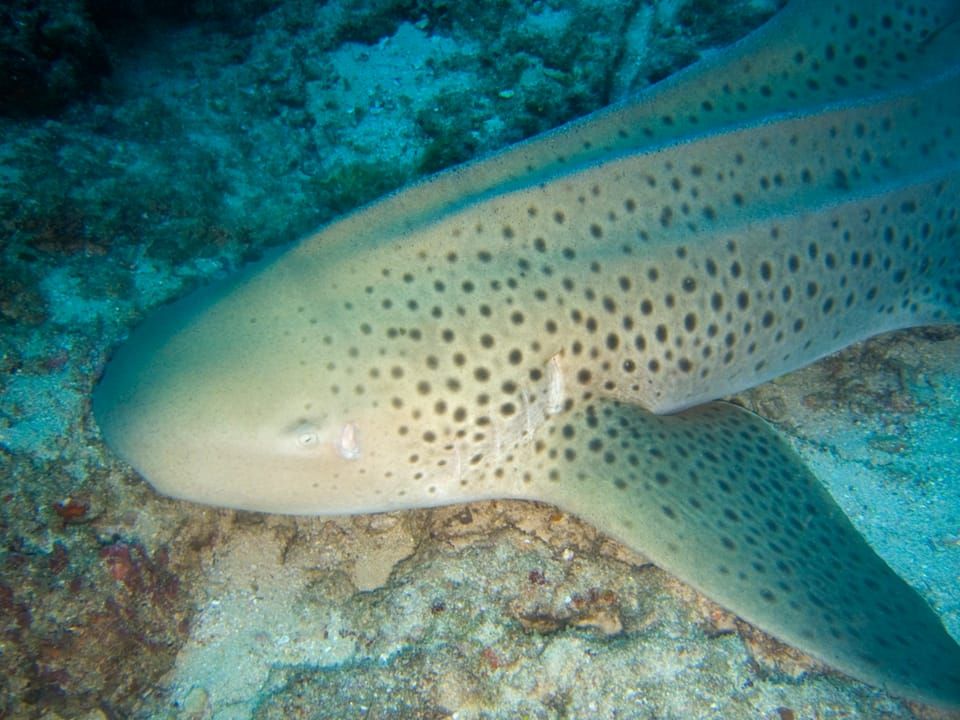
Indo-Pacific Leopard Shark
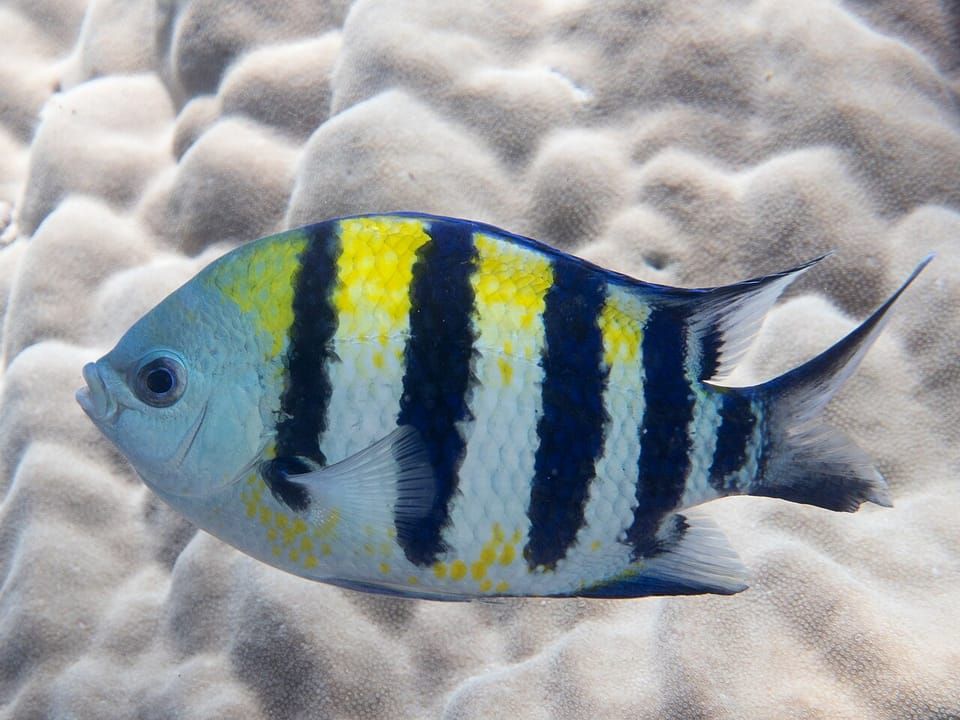
Indo-Pacific Sergeant
Javanese Cownose Ray
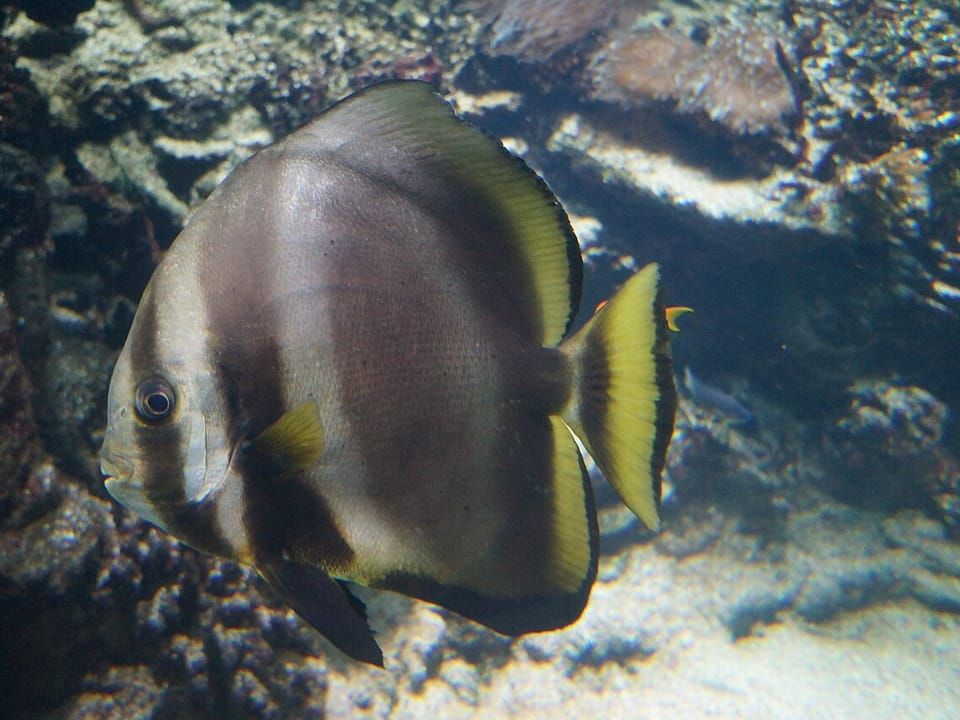
Longfin Batfish
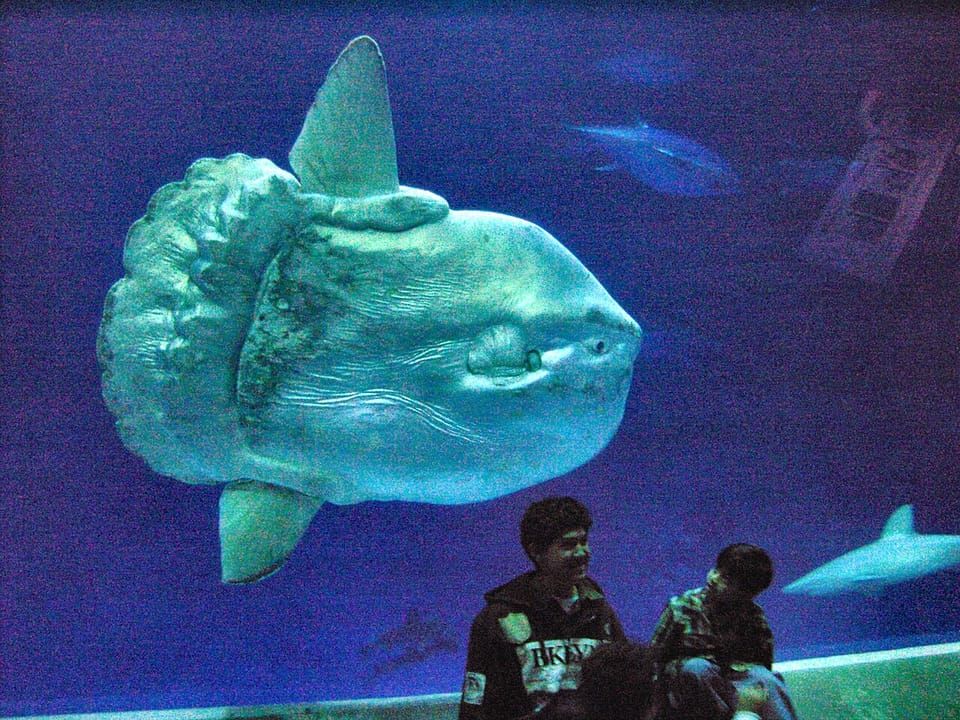
Ocean Sunfish
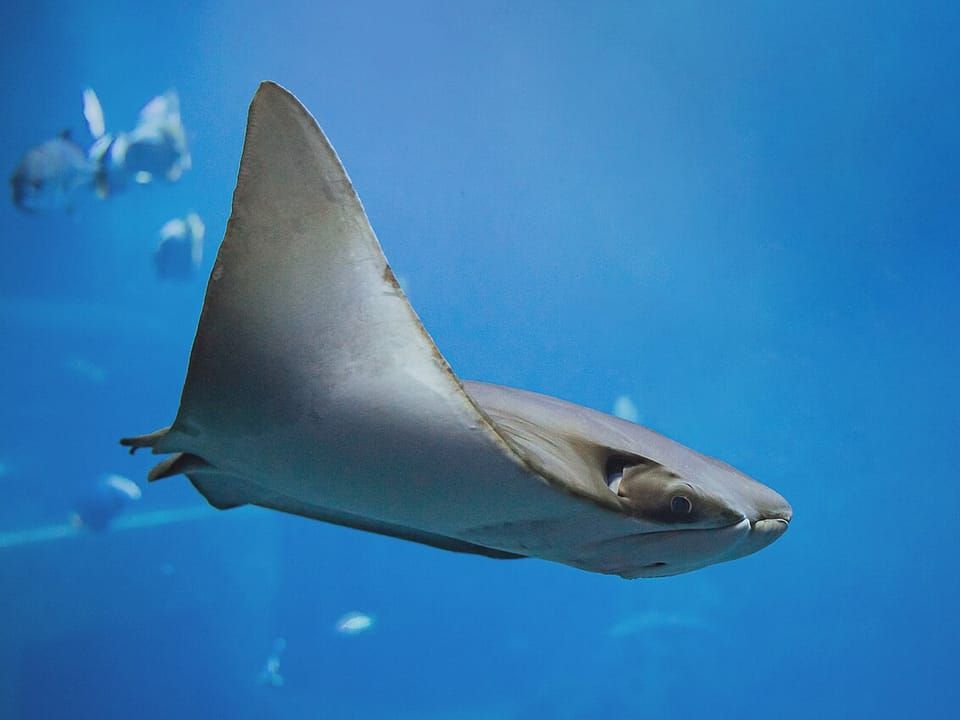
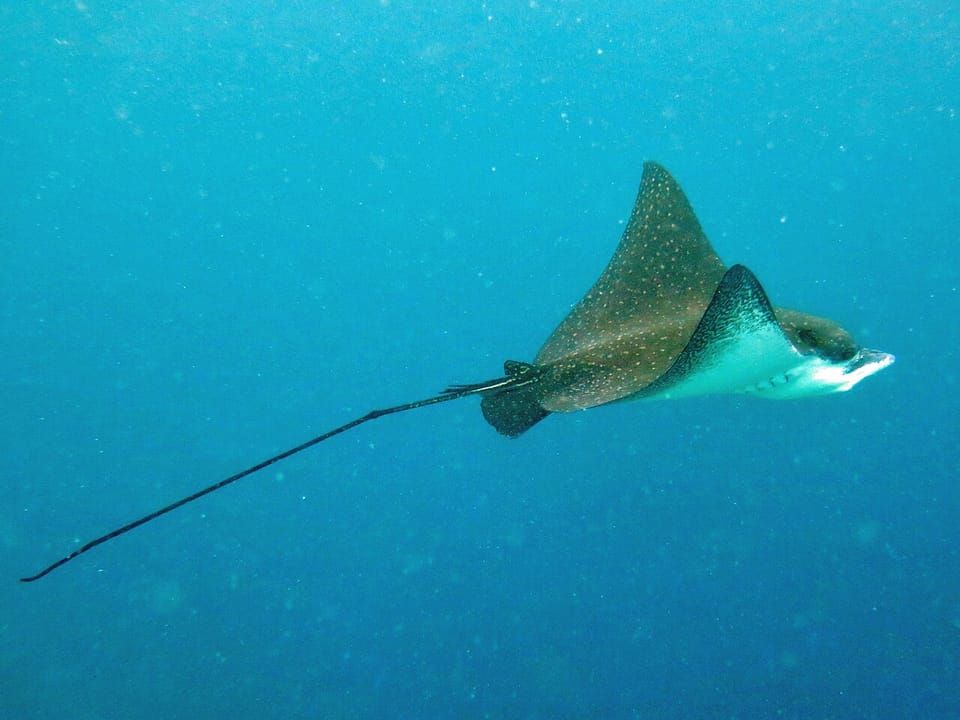
Ocellated Eagle Ray
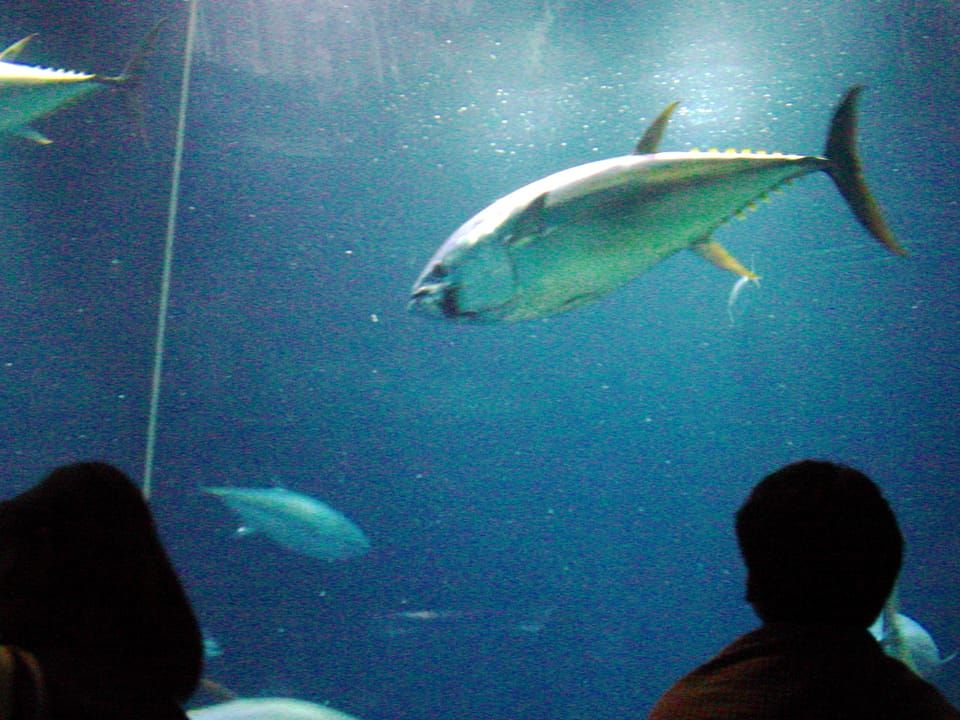
Pacific Bluefin Tuna
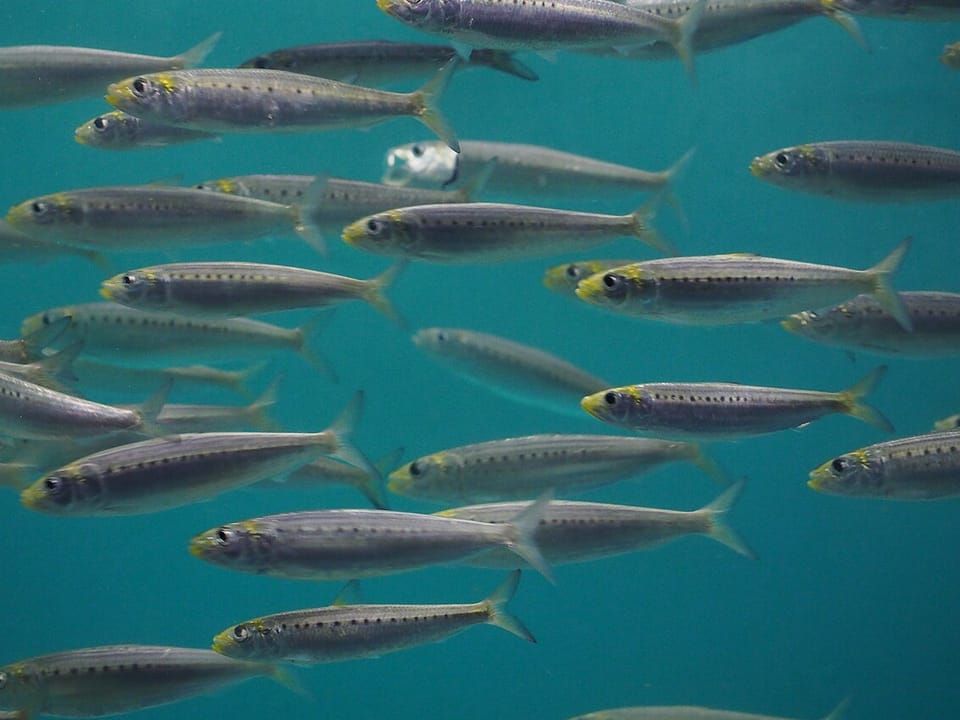
Pacific Sardine
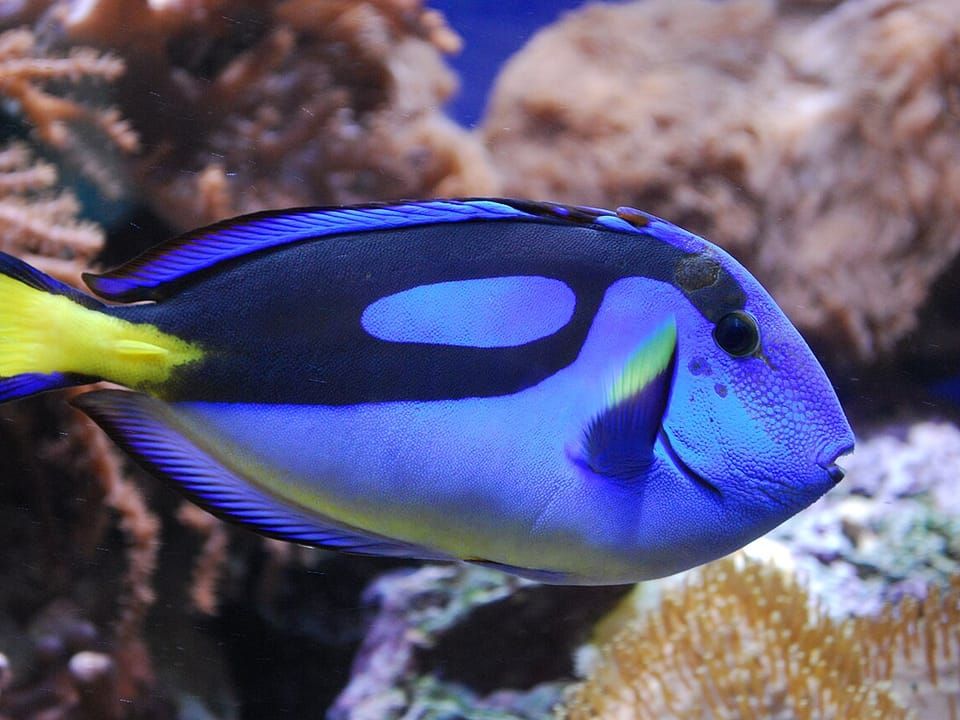
Palette Surgeonfish
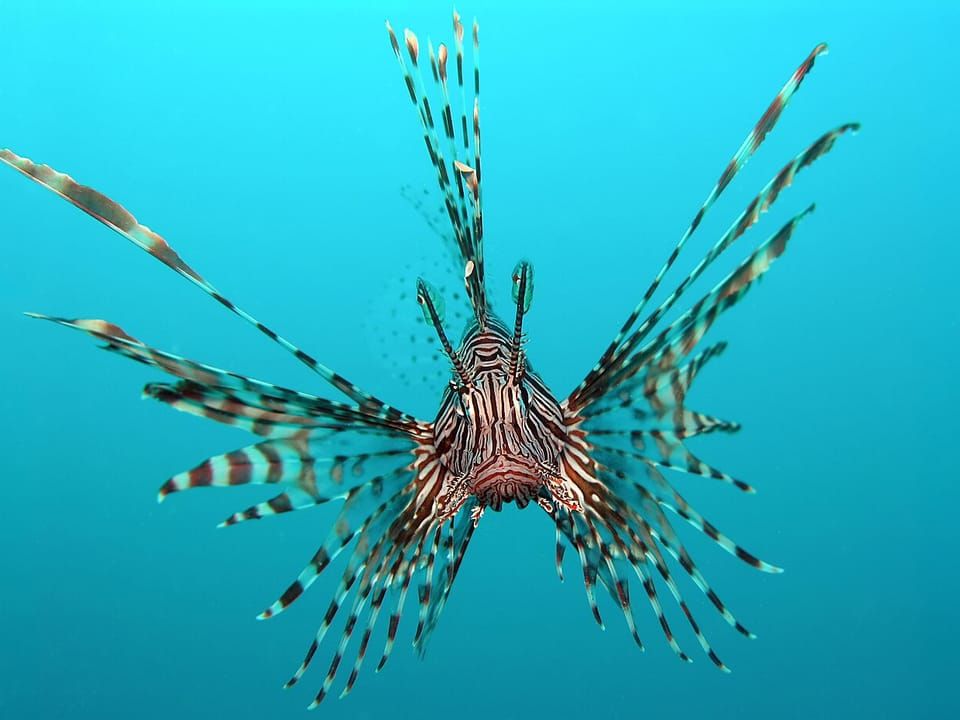
Red Lionfish
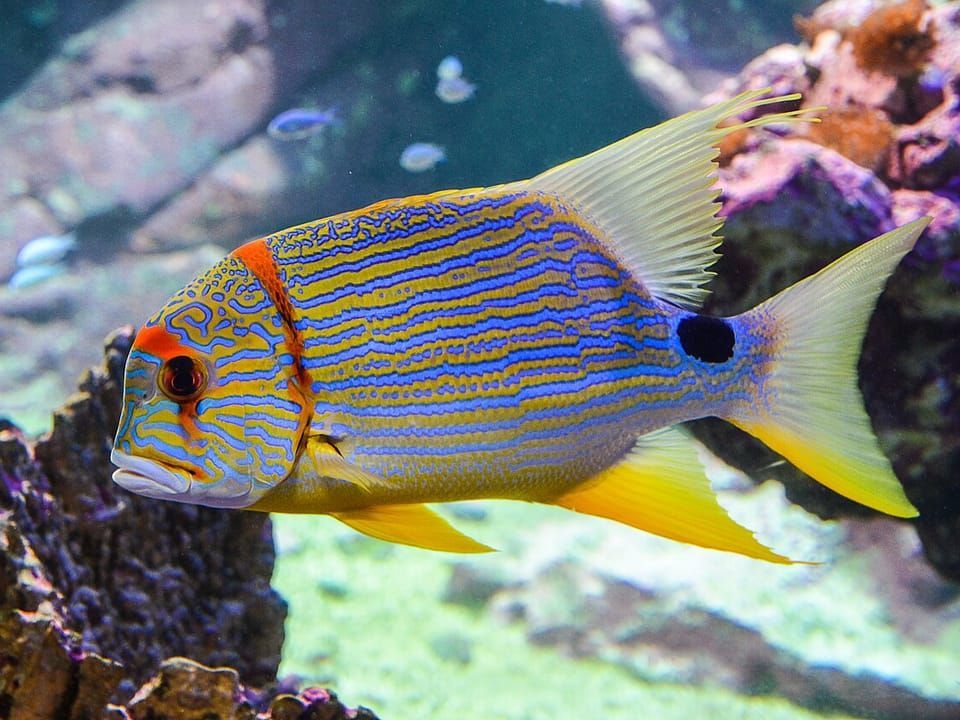
Sailfin Snapper
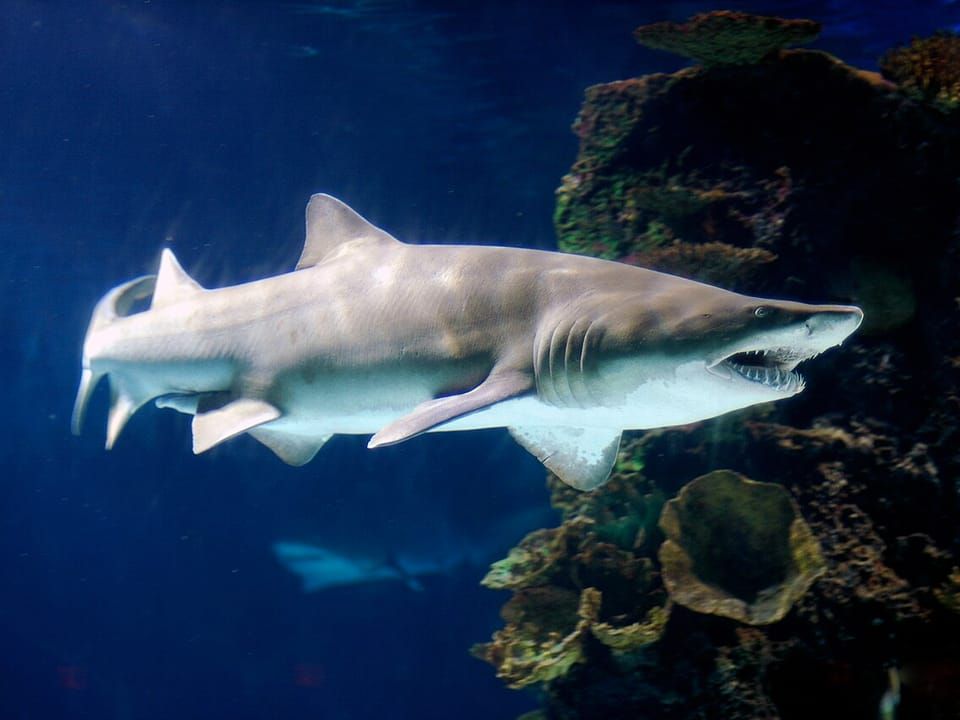
Sand Tiger Shark
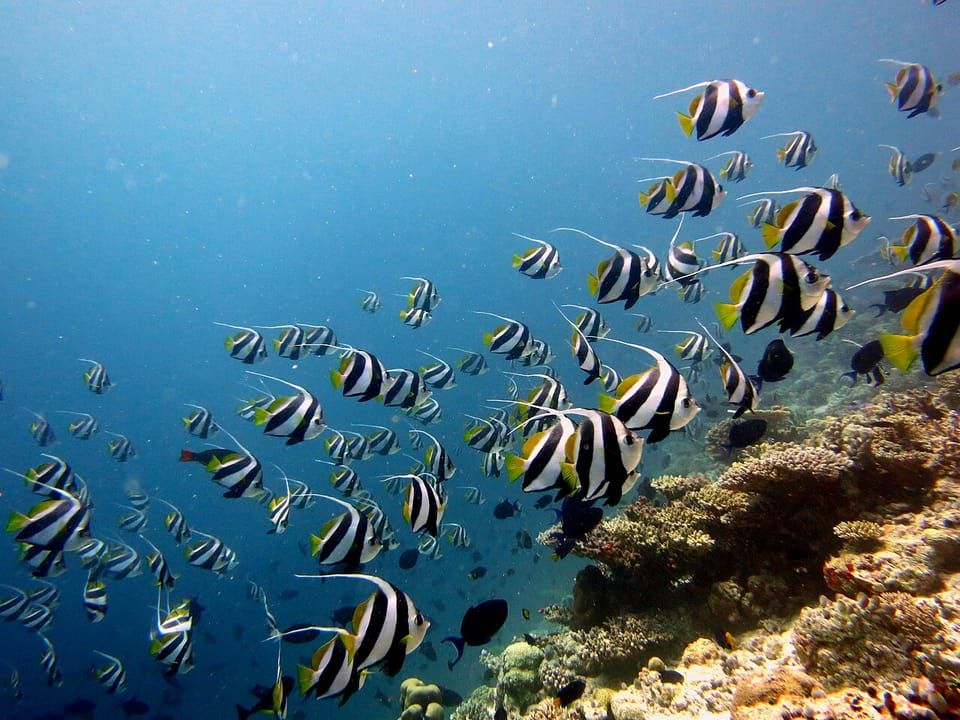
Schooling Bannerfish
Threespot Damselfish
West Indian Manatee
Yellow Tang
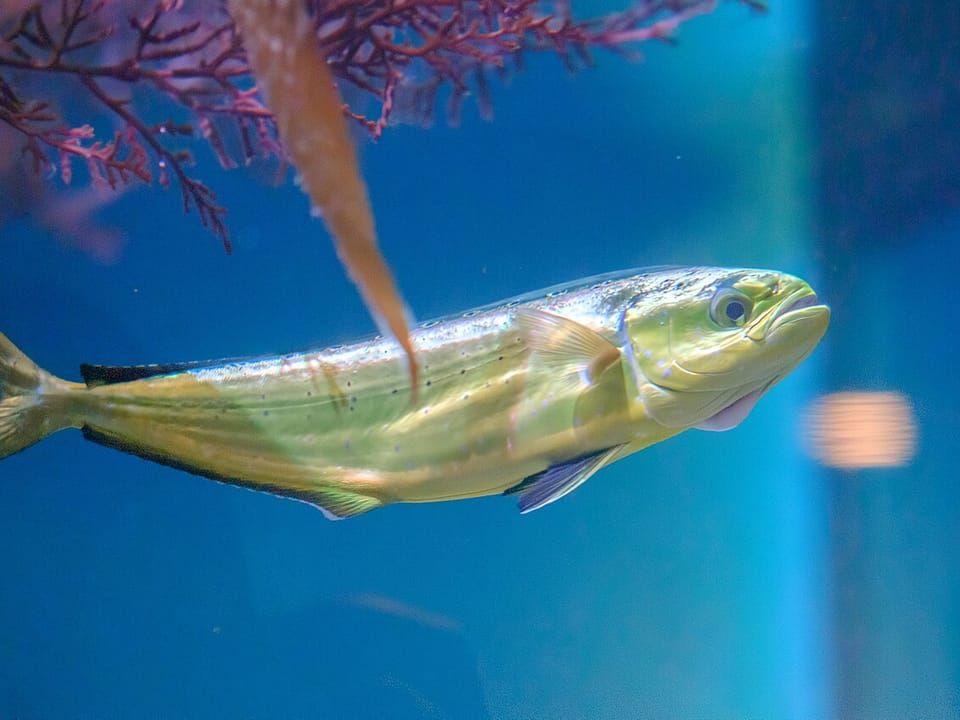
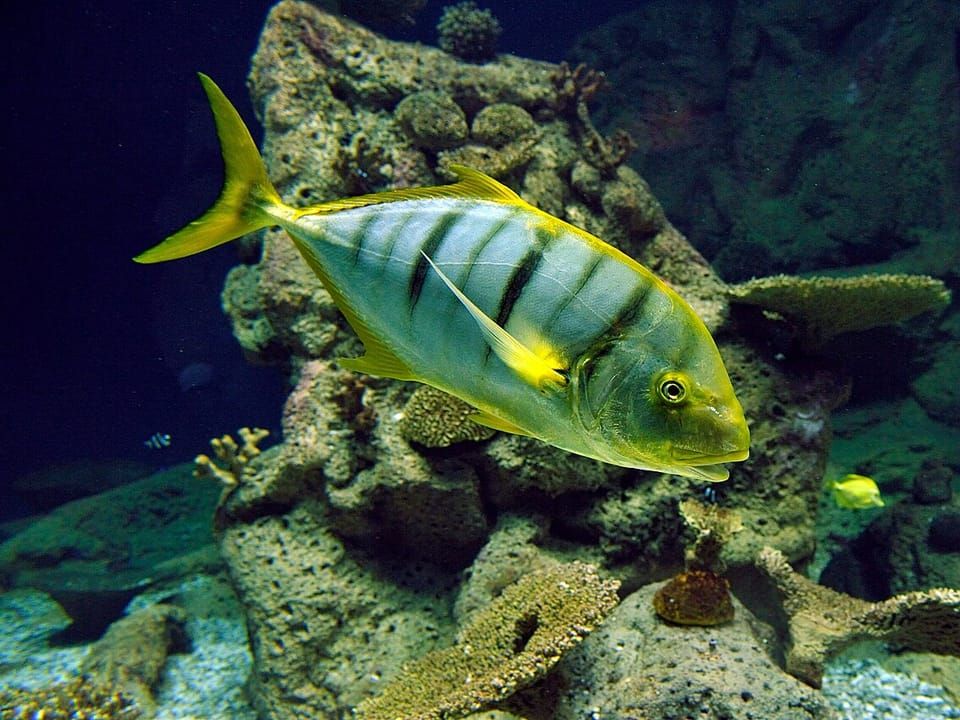
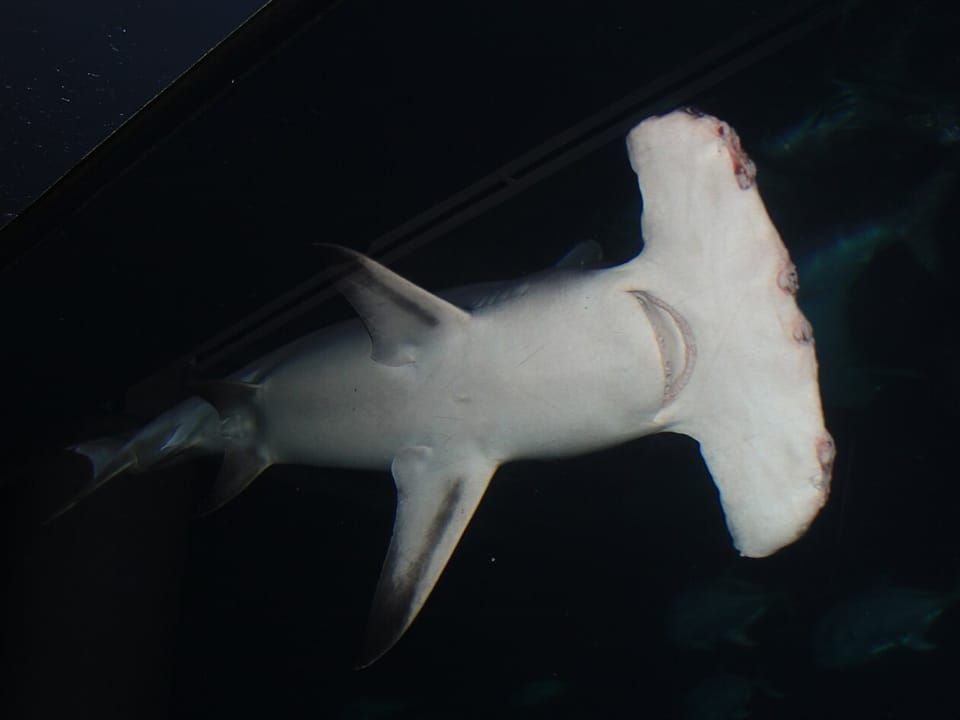
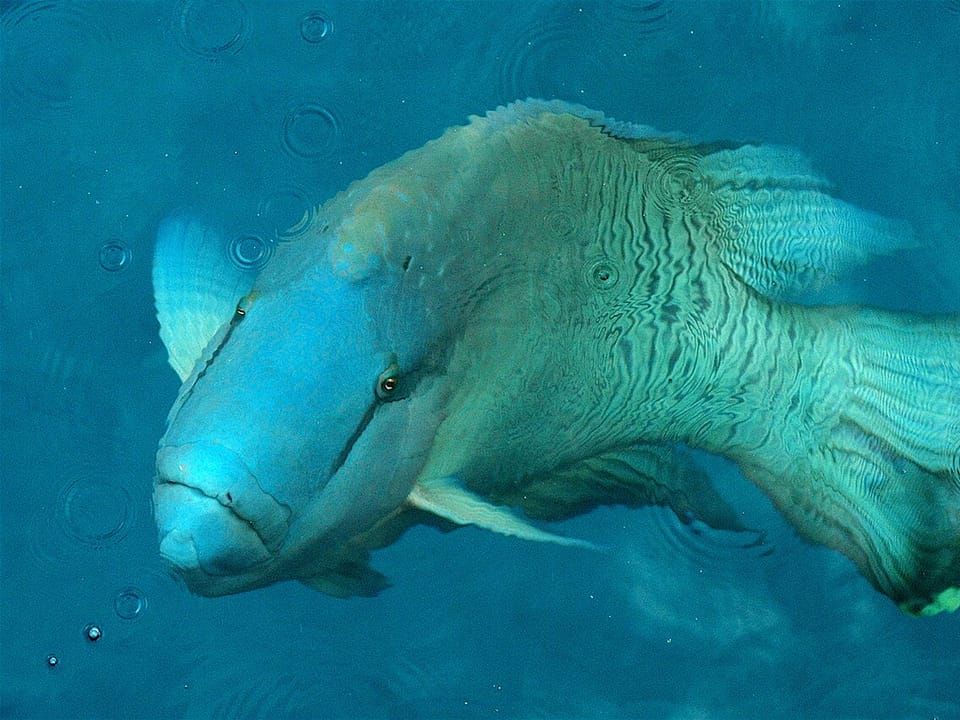
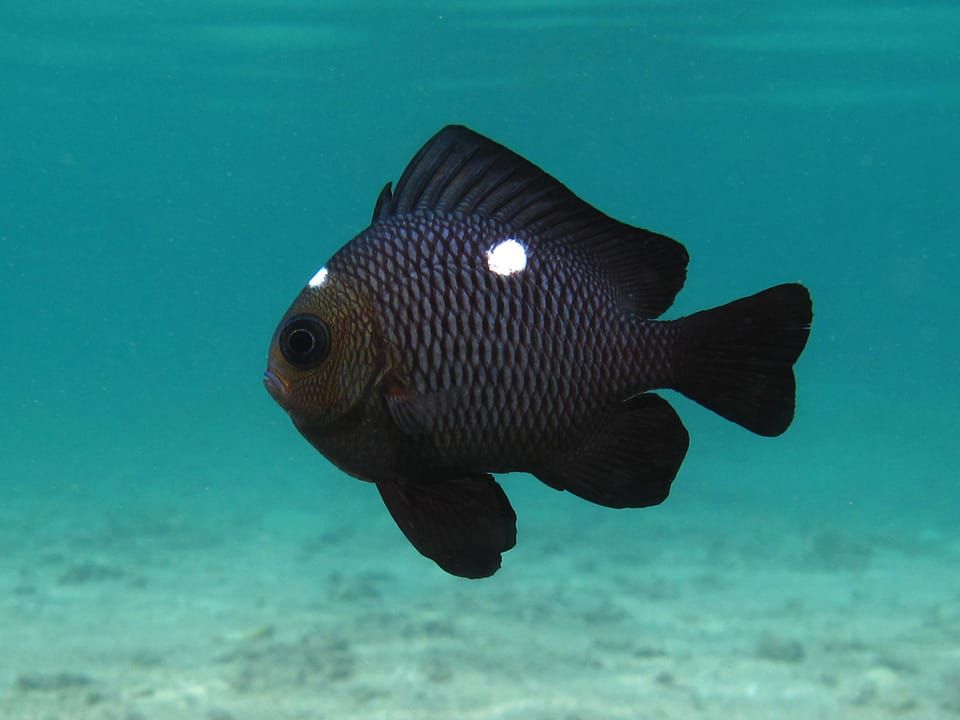
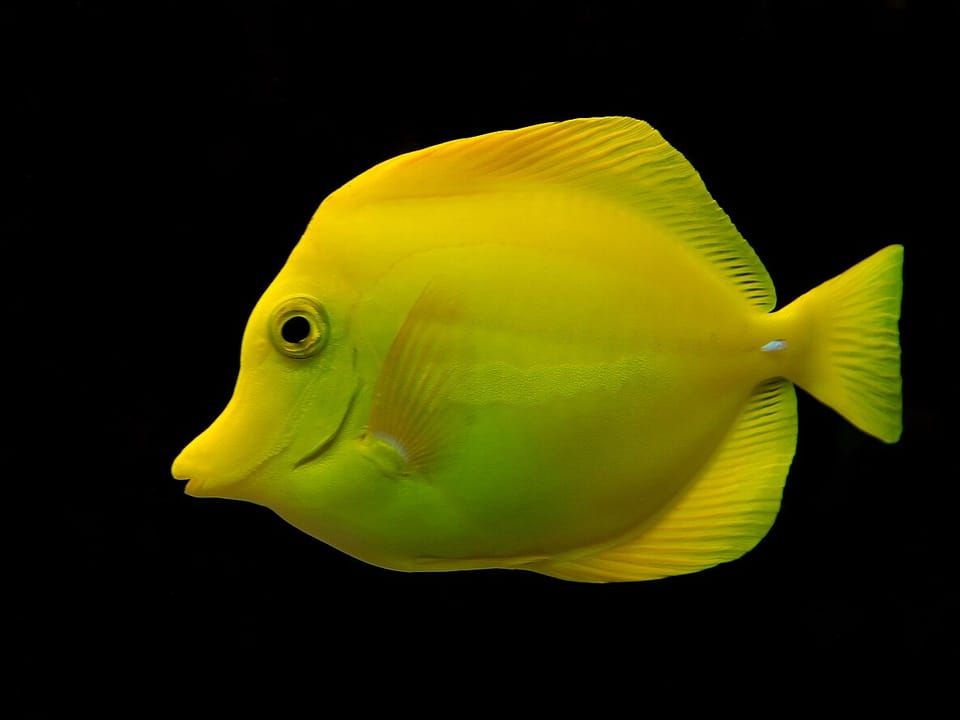
Photos from Wikimedia Commons; authors and licences are on the credits page.
Salinity belongs to the filtration network, not to the tank. Change the network's setting and every tank and pond connected to it changes too, so a saltwater reef and a freshwater koi tank need separate networks. A Water Pump on a network also changes the salinity of the habitat water it serves, and land animals only drink from freshwater.
Water temperature: why some fish can never share a tank
Each species has a temperature band, and welfare drops outside it. The Ocean Sunfish tolerates the coldest water (10 to 25 °C). The Brown Trout (12 to 19 °C) and the Clown Loach (25 to 30 °C) share no temperature at all. If the staff gate has power, you can set the tank's temperature in the Environment tab of its Info Panel. The bigger the gap between that setting and the weather, the more the tank costs to run.
10 °C15 °C20 °C25 °C30 °C
Ocean Sunfish10 to 25 °C
Brown Trout12 to 19 °C
Pacific Sardine15 to 26 °C
Sand Tiger Shark16 to 28 °C
Pacific Bluefin Tuna17 to 26 °C
Common Rudd18 to 24 °C
Koi18 to 25 °C
Great Hammerhead20 to 28 °C
Blue and Gold Fusilier21 to 31 °C
Blacktip Reef Shark22 to 28 °C
Longfin Batfish22 to 28 °C
Red Lionfish22 to 28 °C
Sailfin Snapper22 to 29 °C
African Tigerfish22 to 30 °C
Hawksbill Turtle22 to 30 °C
Humphead Wrasse22 to 30 °C
Blackspotted Puffer23 to 27 °C
Palette Surgeonfish23 to 28 °C
Clown Triggerfish23 to 30 °C
West Indian Manatee23 to 30 °C
Blunthead Cichlid24 to 27 °C
Ocellated Eagle Ray24 to 27 °C
Clown Anemonefish24 to 28 °C
Dolphinfish24 to 28 °C
Giant Gourami24 to 28 °C
Indian Ocean Oriental Sweetlips24 to 28 °C
Indo-Pacific Sergeant24 to 28 °C
Schooling Bannerfish24 to 28 °C
Threespot Damselfish24 to 28 °C
Yellow Tang24 to 28 °C
Bluespine Unicornfish24 to 29 °C
Giant Grouper24 to 29 °C
Indo-Pacific Leopard Shark24 to 29 °C
Golden Trevally24 to 30 °C
Javanese Cownose Ray24 to 30 °C
Boeseman's Rainbowfish25 to 28 °C
Clown Loach25 to 30 °C
Temperature bands from Frontier's Zoopedia, read 20 October 2026. Bar colour shows salinity: freshwaterfreshwater or brackishbrackish or saltwatersaltwaterany. The warmest floor is 25 °C (Boeseman's Rainbowfish and Clown Loach).
Tankmate finder
Pick a species and how many you plan to keep. You get the water it needs, a filter count from Frontier's 500 m² figure, and every partner its Zoopedia page lists, with the salinity and temperature the two share. It runs in your browser and sends nothing.
One filter, 500 m². Frontier's guide says a single water filter cleans up to 500 m² of water, so a larger tank needs several filters on one network. Each filter raises the network's filtration rate. Keep the rate above the tank's demand, which grows with the volume of water and the number of animals.
Sharks need the most water. A Great Hammerhead needs 960 m² of deep water on its own and a pair 1,200 m², which already takes three filters by Frontier's figure. The Sand Tiger Shark needs 660 m² for the smallest group the Zoopedia prefers (2).
Rays come in groups. The Javanese Cownose Ray prefers groups of 5 to 40. Five need 140 m² of deep water, well inside one filter's 500 m².
Two kinds of clean. Water cleanliness comes from the filtration network. Tank cleanliness comes from keepers cleaning the tank, and it falls much faster when the water is dirty. When either drops low enough, it becomes a disease risk, and sick animals need quarantine and a vet.
Leaks. Aquarium barriers wear down and show cracks. Mechanics service them at regular intervals; let condition fall too far and the barrier leaks. Guests walking near a leak run away, and an inspector who spots one ends the inspection and fines you. Assign staff to the area so repairs happen in time.
Editing. You cannot reshape a tank with water or animals in it. Box the animals first, press Drain Water below the aquarium's Info Panel, change the wall height or lower the terrain with the Barrier tool, then refill. Update 1.0.5 fixed fish getting stuck outside a tank when the habitat was moved, and shoals now use extra space when a tank grows.
Shoals. Many fish are managed as a shoal, not as individuals. A shoal with good welfare grows to a maximum, then part of it splits off as a new shoal; contraception stops the split. A shoal with poor welfare shrinks until it dies out. Shoals have no genetics to manage, though some species, such as the Koi, have colour morphs.
Aquarium fixes since launch
Update 1.0.4, 14 October. Improved shoal welfare requirements, info panels that show a shoal's social group welfare, dead shoals that no longer teleport, and juvenile shoals that can be listed for trading in Franchise mode.
Update 1.0.5, 16 October. Fish no longer get stuck outside a moved aquarium, shoals use new space when a tank is enlarged, and vets no longer get stuck removing dead animals from aquariums.
Being tested, 20 October. Frontier's "Under Investigation" post lists fixes for the next update: keepers reaching aquarium forage trays, fewer animals boxed when you edit aquariums and habitats, and better shoal animations. Frontier says these are not final patch notes.
The four species above need the most deep water for one animal: Great Hammerhead 960 m², Sand Tiger Shark 420 m², Dolphinfish 400 m² and Ocean Sunfish 300 m². 16 aquarium species can also live in an exhibit instead. For every aquarium species in one sortable table, with deep water per extra animal and group size, see the animal requirements page; its calculator plans the space for any group. For biomes and regions, see the Planet Zoo 2 fish list.
Common questions
How do you build an aquarium in Planet Zoo 2?
Open the Habitat Barrier tool and choose Aquarium, then draw the tank with the Line or Curve tool. Place an Aquarium Staff Gate and the tank fills with water, freshwater by default. Connect the gate to a filtration network to set the salinity and keep the water clean, then add feeders, nests and enrichment from the Aquarium tab of the Browser.
How do I change the salinity of an aquarium?
Through the filtration network connected to the tank. In Edit Filtration Network you set the network to Freshwater, Brackish or Saltwater, and every body of water on that network changes with it. Freshwater and saltwater tanks therefore need separate networks.
How many water filters does an aquarium need?
Frontier's Aquariums guide says one water filter cleans up to 500 m² of water, so a bigger tank needs more than one. Demand also rises with the number of animals. If the network's filtration rate stays below the tank's demand, water cleanliness falls.
Why is my aquarium leaking?
Aquarium barriers lose condition over time. Mechanics have to service them, and when condition gets too low the barrier starts to leak. Guests flee from leaks, and an inspector who finds one ends the inspection with a fine.
How do I edit or resize an aquarium?
Empty it first. Box up the animals, then use the Drain Water button below the aquarium's Info Panel. Once the tank is empty you can change the wall height or lower the terrain with the Barrier tool, then add the water back. Since Update 1.0.5 (16 October 2026), shoals use the new space when you enlarge a tank.
How many aquarium animals are in Planet Zoo 2?
37, according to Frontier's Zoopedia on 20 October 2026: 35 fish, sharks and rays, plus the Hawksbill Turtle and West Indian Manatee. Three of them (Blue and Gold Fusilier, Great Hammerhead and Longfin Batfish) come only with the Deluxe Edition.
Which aquarium animals can live together?
Each Zoopedia page lists "thriving" and "neutral" partners. Four species (Humphead Wrasse, Indo-Pacific Leopard Shark, Javanese Cownose Ray and Ocellated Eagle Ray) each list 11 thriving partners. The African Tigerfish, Brown Trout, Great Hammerhead and West Indian Manatee list no partners at all. The tankmate finder on this page shows each species' list with the salinity and temperature they share.
Each source was opened and checked on 20 October 2026. Frontier's own pages are the authority; if they change, they take precedence over this page.
Frontier player guide, "Aquariums": building an aquarium, staff gates, freshwater default, editing and draining, temperature and running costs, barrier condition and leaks, filtration, one water filter per 500 m², water and tank cleanliness
Frontier player guide, "Building Your Zoo": filtration buildings and networks, pipes from the aquarium node, salinity per network, water pumps, osmotic stress, power facilities
Frontier, Planet Zoo 2 Zoopedia: the 37 aquarium species pages: salinity, temperature, deep-water area, preferred group and thriving and neutral partners, read 20 October 2026